
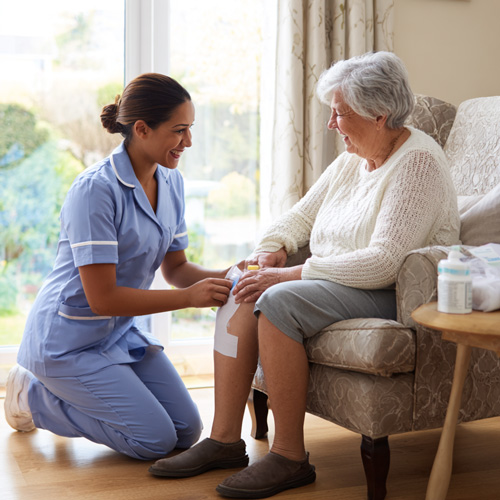
Wounds need proper professional care to heal well and avoid complications. Whether you’re dealing with a surgical wound, chronic ulcer, pressure injury, or other wound, our Registered Nurses provide expert wound management in your home – the same quality care you’d receive in a hospital or wound clinic, delivered where you’re most comfortable.
Wound care isn’t just about changing dressings. It requires clinical assessment skills, knowledge of healing processes, ability to identify infection or complications, coordination with doctors, and proper technique. Our experienced nurses bring all of this expertise to your home.
Professional wound care aims to:
Have questions?
Your local team of Client Care Managers are available to answer your questions and work with you to design a customized plan of care that is right for you.
Types of Wounds We Manage
Surgical Wounds:
Post-operative wounds from surgeries, incisions requiring monitoring and care, wound healing assessment, suture or staple removal when appropriate.
Chronic Wounds:
Leg ulcers (venous, arterial, or mixed), diabetic foot ulcers, pressure injuries (bed sores), wounds that haven’t healed despite treatment.
Acute Wounds:
Cuts, lacerations, abrasions, skin tears (common in elderly with fragile skin), burns (minor), traumatic injuries.
Other Wound Types:
Fungating wounds, wounds from skin conditions, wounds requiring specialized dressings, complex wounds needing ongoing management.
Our wound management follows:
We stay current with:
Our Wound Management Services
Comprehensive Wound Assessment:
Every wound is different. Our nurses conduct thorough assessment including wound measurement and documentation, assessment of wound bed and edges, evaluation of surrounding skin, identification of infection signs, pain assessment, understanding factors affecting healing, photography for tracking progress (with consent).
Professional Wound Care:
Wound cleaning using appropriate solutions, removal of dead tissue (when within nursing scope), application of appropriate dressings, wound bed preparation, management of exudate (wound fluid), protection of surrounding skin, pain management strategies.
Specialized Dressings:
We use and can apply various specialized dressings: foam dressings, hydrocolloid dressings, alginate dressings, antimicrobial dressings, compression bandaging, negative pressure wound therapy dressings (if prescribed), other advanced wound products.
Monitoring and Documentation:
Regular wound assessment and measurement, photographic documentation tracking healing, detailed notes for your records and doctor, identification of healing or deterioration, monitoring for complications.
Education and Support:
Teaching you or family members about wound care, explaining signs of infection to watch for, nutritional advice supporting healing, activity guidance protecting the wound, answering questions and addressing concerns.
Coordination with Healthcare Team:
Regular reports to your GP or specialist, recommendations for treatment adjustments if needed, arranging specialist review when appropriate, ensuring continuity between hospital and home care.
Frequently Asked Questions (FAQs)
Gratifying Care is proud to committed to offer the best possible answers to all your questions. We have compiled a list of few questions that have been repeatedly asked to us.
How often will the nurse need to visit for wound care?
Visit frequency depends on your wound type and healing stage. Initially, some wounds need daily visits. As healing progresses, visits might reduce to several times weekly, then weekly. We adjust frequency based on clinical need and healing progress.
Will wound care hurt?
We aim to minimize pain during wound care. Some discomfort may occur, particularly with cleaning or dressing removal, but we use gentle techniques, pain relief strategies (if prescribed), and work at a pace comfortable for you. Tell us if you’re experiencing pain-we can adjust our approach or discuss pain management with your doctor.
How long until my wound heals?
Healing time varies greatly depending on wound type, size, location, your overall health, and other factors. Simple surgical wounds might heal in weeks. Chronic wounds can take months. We monitor progress and keep you informed about how healing is progressing.
Can I shower or bathe with a wound?
Depends on the wound and dressing type. Some wounds and dressings can get wet; others need protection from water. We’ll provide clear guidance about showering, bathing, and keeping dressings dry or waterproof options if appropriate.
What if my wound isn’t healing?
If a wound isn’t healing as expected, we reassess the wound and care plan, review factors that might be affecting healing, discuss with your doctor, potentially recommend specialist review (wound clinic, vascular surgeon, etc.), adjust treatment approach.
Should I be taking special vitamins or eating certain foods?
Nutrition is important for wound healing. Adequate protein, vitamin C, zinc, and overall nutrition support healing. We can provide general nutritional guidance and may suggest discussing with your doctor or a dietitian if nutritional concerns exist.
Can family members learn to do dressing changes?
For some straightforward wounds, family members can be taught basic dressing changes between nurse visits, potentially reducing visit frequency while maintaining wound care. We provide education and ongoing supervision. However, complex wounds need professional nursing care.
What if I notice signs of infection?
Contact us immediately if you notice increased pain, redness spreading around wound, swelling, warmth, pus or discharge, foul odor, fever, or wound appearance worsening. We’ll arrange an urgent visit to assess and contact your doctor. Infection needs prompt treatment.
Will I be left with a scar?
Most wounds leave some scarring. Proper wound care helps minimize scarring by promoting optimal healing, working to prevent infection, avoiding tension on wound edges. We can discuss scar management strategies as healing progresses.
Do you handle wound care for people with diabetes?
Yes. Diabetic wounds, particularly foot ulcers, require specialized care. Our nurses have experience with diabetic wound management, understand importance of blood glucose control in healing, work closely with your doctor and diabetes educator, provide foot care education.
Medical Disclaimer
The information on this page is for educational purposes only and does not constitute medical advice. Clinical nursing services are delivered by qualified Registered Nurses working within their scope of practice and in coordination with your doctor and healthcare team. Always consult your GP or specialist about your specific health needs and treatment. Our nursing services complement but do not replace medical care from your doctor.