
Coming home from hospital should feel like a relief, but it can also feel overwhelming and uncertain. You’re recovering from illness, surgery, or injury while managing new medications, wound care, or activity restrictions-all without the constant presence of hospital nurses and doctors.
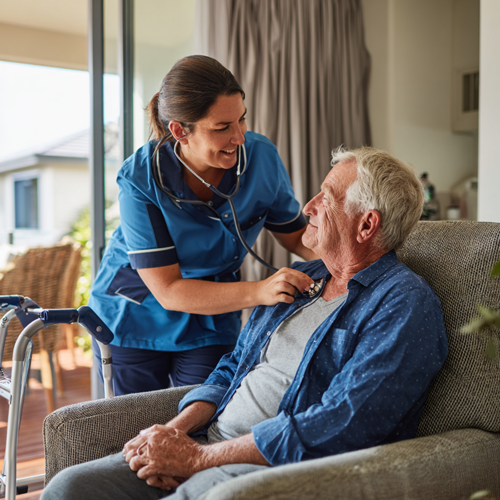
Our Registered Nurses provide professional post-hospital care in your home, supporting your recovery, monitoring your progress, and working to help prevent the complications that can lead to hospital readmission. It’s the bridge between hospital care and independent living, delivered where you’re most comfortable.
Professional nursing care during this transition can help:
Have questions?
Your local team of Client Care Managers are available to answer your questions and work with you to design a customized plan of care that is right for you.
Our Post-Hospital Care Services
Comprehensive Post-Discharge Assessment:
Within 24-48 hours of hospital discharge (or sooner if urgent), our Registered Nurse visits to conduct thorough assessment, review hospital discharge instructions and medications, understand surgery or treatment received, check surgical wounds or medical devices, assess pain levels and management, evaluate mobility and functional ability, identify immediate concerns or risks.
Regular Recovery Monitoring:
Scheduled visits based on your recovery needs (daily, several times weekly, or weekly). Each visit includes vital signs monitoring (blood pressure, temperature, pulse, oxygen levels), wound assessment and care if applicable, medication review and assistance, checking for infection signs or complications, assessing pain and symptom management, mobility and functional assessment, education about recovery milestones.
Medication Reconciliation and Management:
Hospital stays often result in medication changes. We help by reviewing discharge medication list, comparing to pre-hospital medications, identifying what’s new, changed, or discontinued, setting up medication routine, educating about new medications, monitoring for side effects, coordinating with GP and pharmacy.
Wound Care:
If you have surgical wounds or incisions, our nurses provide professional wound care, dressing changes, suture or staple removal when appropriate, monitoring for infection signs, education about wound care.
Medical Device Management:
Support with catheters, drains, feeding tubes, oxygen equipment, other medical devices sent home with you.
Symptom Management:
Monitoring and managing pain, nausea, fatigue, shortness of breath, other post-hospital symptoms, coordinating with doctor for symptom control.
Coordination with Healthcare Team:
Communicating with your hospital doctors, coordinating with your GP, arranging follow-up appointments, reporting concerns requiring medical review, ensuring smooth care continuity.
Patient and Family Education:
Teaching about recovery process and expected timeline, explaining activity restrictions and when they can be lifted, providing dietary guidance if relevant, demonstrating exercises or therapies, answering questions and addressing concerns.
When to Seek Urgent Medical Attention
While our nurses monitor your recovery, some situations require immediate medical attention. Call 000 or go to emergency if you experience:
For non-emergency concerns between nursing visits:
Common Post-Hospital Situations We Support
Post-Surgical Recovery:
After operations (orthopedic, cardiac, abdominal, etc.), wound care and incision monitoring, pain management, mobility support, preventing surgical complications.
Cardiac Events:
After heart attack, cardiac procedures, heart surgery, medication management, symptom monitoring, education about cardiac recovery, activity progression guidance.
Respiratory Conditions:
After pneumonia, COPD exacerbation, respiratory procedures, oxygen management if needed, breathing exercises, preventing re-infection.
Infection Treatment:
After serious infections requiring hospitalization, IV antibiotic administration at home if prescribed, monitoring for treatment effectiveness, preventing re-infection.
Falls or Fractures:
After falls resulting in hospitalization, fracture care, mobility assessment, falls prevention education, home safety assessment.
Medical Procedures:
After endoscopy, colonoscopy, other procedures, monitoring for complications, supporting recovery.
Chronic Disease Exacerbations:
After hospitalization for diabetes complications, kidney disease, liver disease, chronic conditions, helping stabilize at home, preventing recurrence.
Palliative Care:
Supporting comfort and quality of life after hospital stays for serious illness, symptom management, coordinating palliative services.
Frequently Asked Questions (FAQs)
Gratifying Care is proud to committed to offer the best possible answers to all your questions. We have compiled a list of few questions that have been repeatedly asked to us.
How quickly can post-hospital nursing start?
We aim to have a nurse visit within 24-48 hours of hospital discharge, or sooner for urgent situations. Call us as soon as you know discharge is planned, or immediately after arriving home from hospital.
How long will I need post-hospital care?
Duration depends on your recovery. Simple recoveries might need 1-2 weeks of nursing support. More complex situations might need 4-6 weeks or longer. We adjust visit frequency and duration based on your progress.
Will the hospital arrange post-hospital nursing for me?
Sometimes hospitals arrange this, but often you or your family need to organize it. We work with hospital discharge planners, but it’s best to contact us directly as well to ensure smooth transition.
Can you start before I’m discharged from hospital?
Yes, ideally. Contact us when discharge is being planned. We can liaise with hospital staff, review discharge plans, and be ready to visit immediately after you arrive home.
What if I’m discharged on a weekend or evening?
Contact us as soon as you’re home. We’ll arrange nursing visit as soon as possible. For urgent concerns outside business hours, go to emergency department or call 000.
Do you communicate with my hospital doctors?
Yes, with your consent. We obtain discharge summaries, communicate concerns requiring hospital follow-up, provide feedback about recovery progress if needed.
What if I develop complications?
We monitor for complications at each visit. If identified, we contact your GP immediately (or advise you to do so), arrange additional nursing visits if needed, provide guidance about whether emergency care is needed, adjust your care plan.
Can you remove my stitches or staples?
Yes, if this is within the timeframe specified in your discharge instructions and your wound is healing appropriately. We assess the wound and remove sutures or staples when appropriate.
Will you help me understand my new medications?
Yes. Medication education is an important part of post-hospital care. We explain what each medication is for, how and when to take it, potential side effects, what to do if you miss a dose.
How much does post-hospital care cost?
Costs depend on your funding. Support at Home Program: Covered by government funding. Home Care Packages: Included in package budget. NDIS: May be covered if approved. DVA: Covered for eligible veterans. Private: We provide transparent pricing. Many people use private funding for short-term post-hospital care while waiting for government funding. Contact us to discuss costs.
Medical Disclaimer
The information on this page is for educational purposes only and does not constitute medical advice. Clinical nursing services are delivered by qualified Registered Nurses working within their scope of practice and in coordination with your doctor and healthcare team. Always consult your GP or specialist about your specific health needs and treatment. Our nursing services complement but do not replace medical care from your doctor.